The platform
A carrier,
not a product
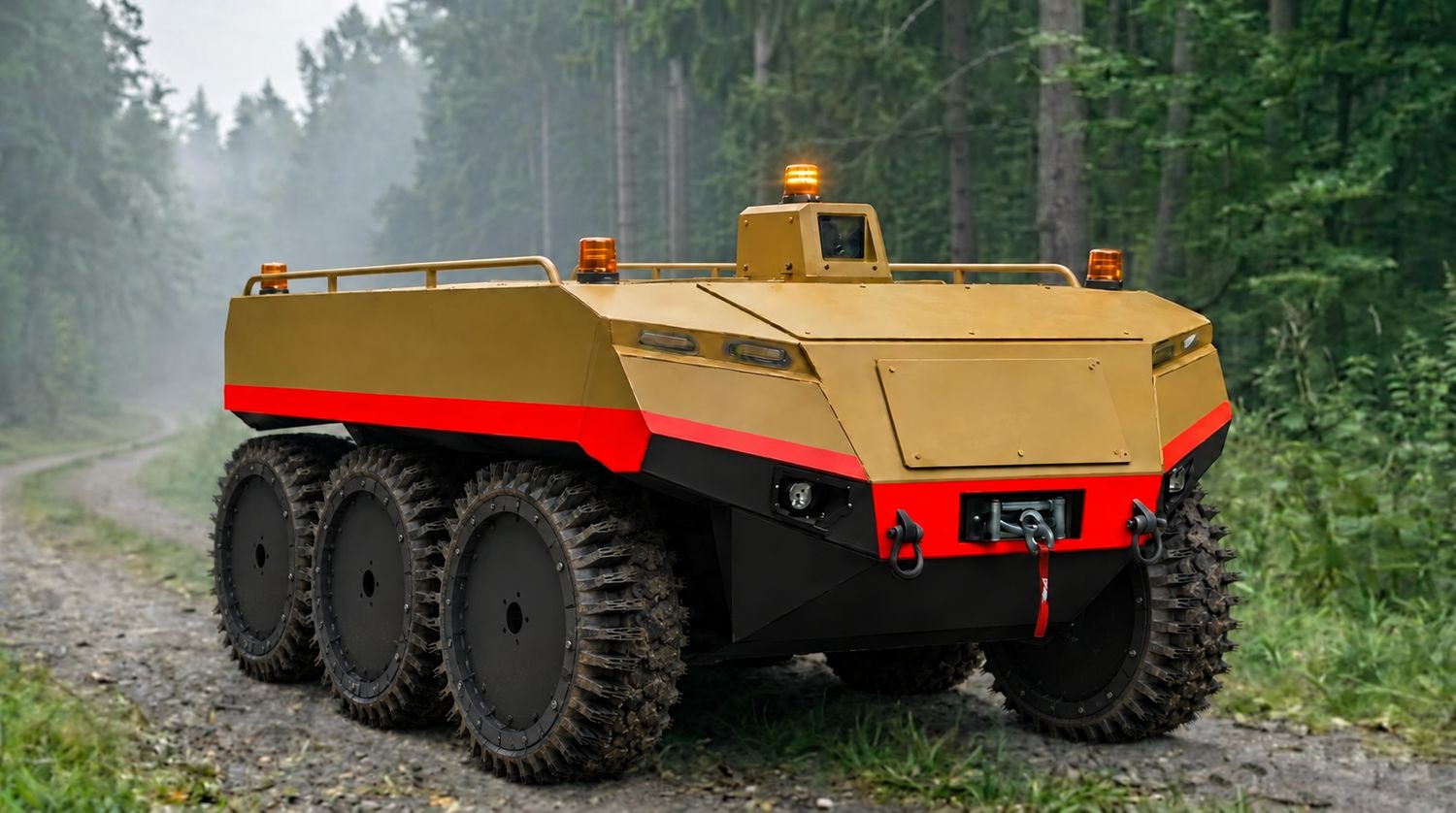
A 6×6 wheeled platform with a standard payload interface, remote control at up to five kilometres and a jib that lets a minimal crew change configuration in the field.
A 6×6 wheeled platform with a standard payload interface, remote control at up to five kilometres and a jib that lets a minimal crew change configuration in the field.
Three modes: following the crew, remote control, and an autonomous run along a route with return.
In follow mode the machine walks behind the team on its own and needs no operator. At a distance the operator drives it from the camera picture and is not tied to line of sight: link range runs from 1.5 to 5 km depending on the channel chosen.
On loss of link the machine returns to its start point, stops, or continues the task — at the operator’s prior choice.
Airless wheels rule out punctures on rock, roots, burnt undergrowth and scree. Drum brakes on all six wheels; braked trailers up to two tonnes.
A published standard mount, so a module built for one configuration fits another. The function of the machine changes with the module.
Tied into the load-bearing frame and delivering power to the attachment. Gross weight holds the machine steady against the reaction of the tool.
Mounted on the frame, so it stays when the module comes off. The machine removes and fits its own modules and handles heavy items.
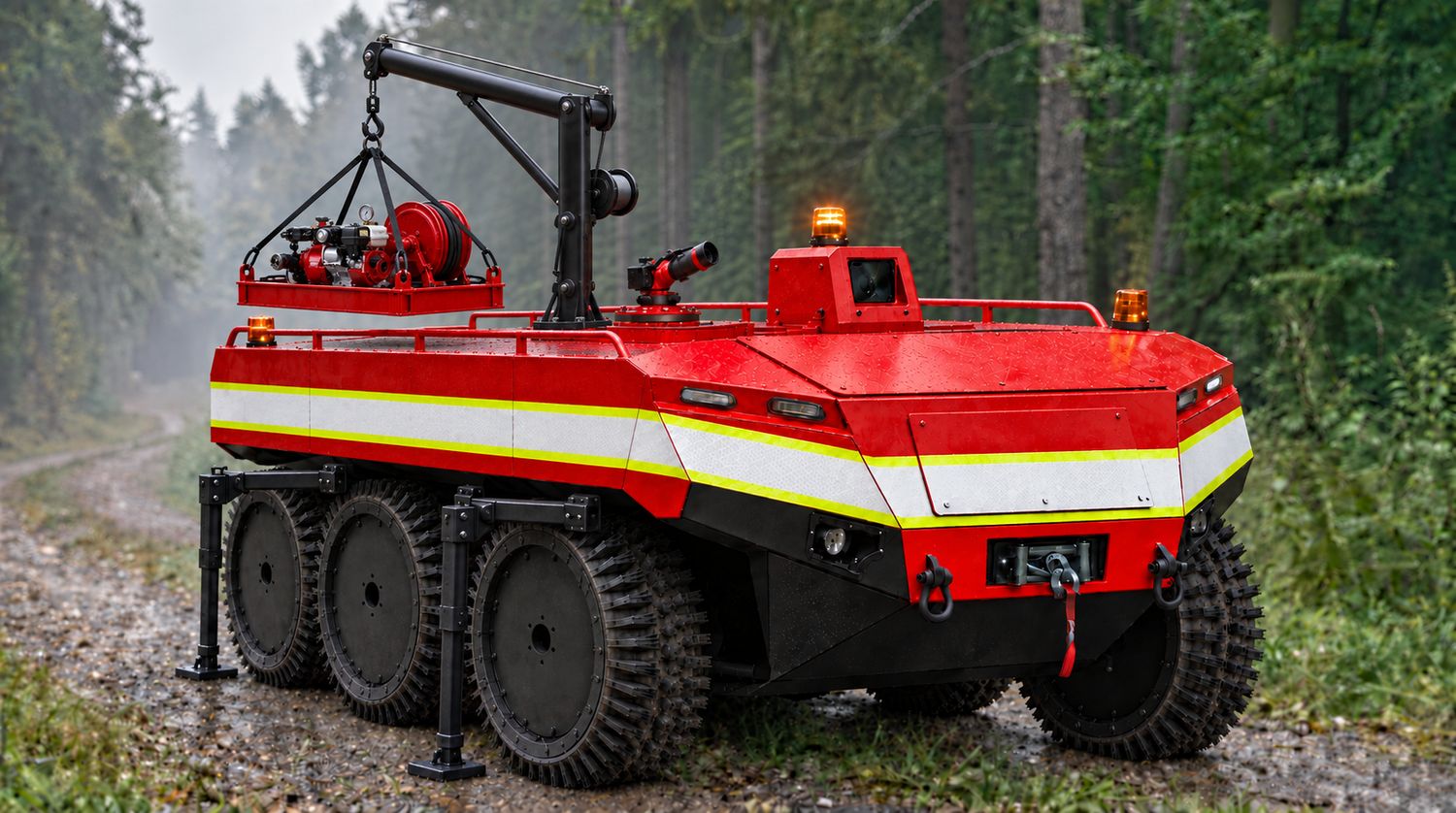
The crew deploys the outriggers, lifts the spent module clear onto the ground and fits the next. No forklift, no crane, no second vehicle.
This works because modules are light when dry: a tank and pump skid weighs about a hundred kilograms, a monitor around forty. Water goes in after the module is mounted.
The platform is supplied in a configuration set by the customer and by what is permitted in the country of operation. Performance of the fitted equipment therefore belongs to a configuration, not to the product in general.
Every delivery carries a configuration passport: for each unit, the manufacturer, the country of production, the stated figures and the conditions under which they were obtained.
Verifiable figures for a given site come from acceptance testing on that site.