Wildfire response
Closer to the fire
than a person can go
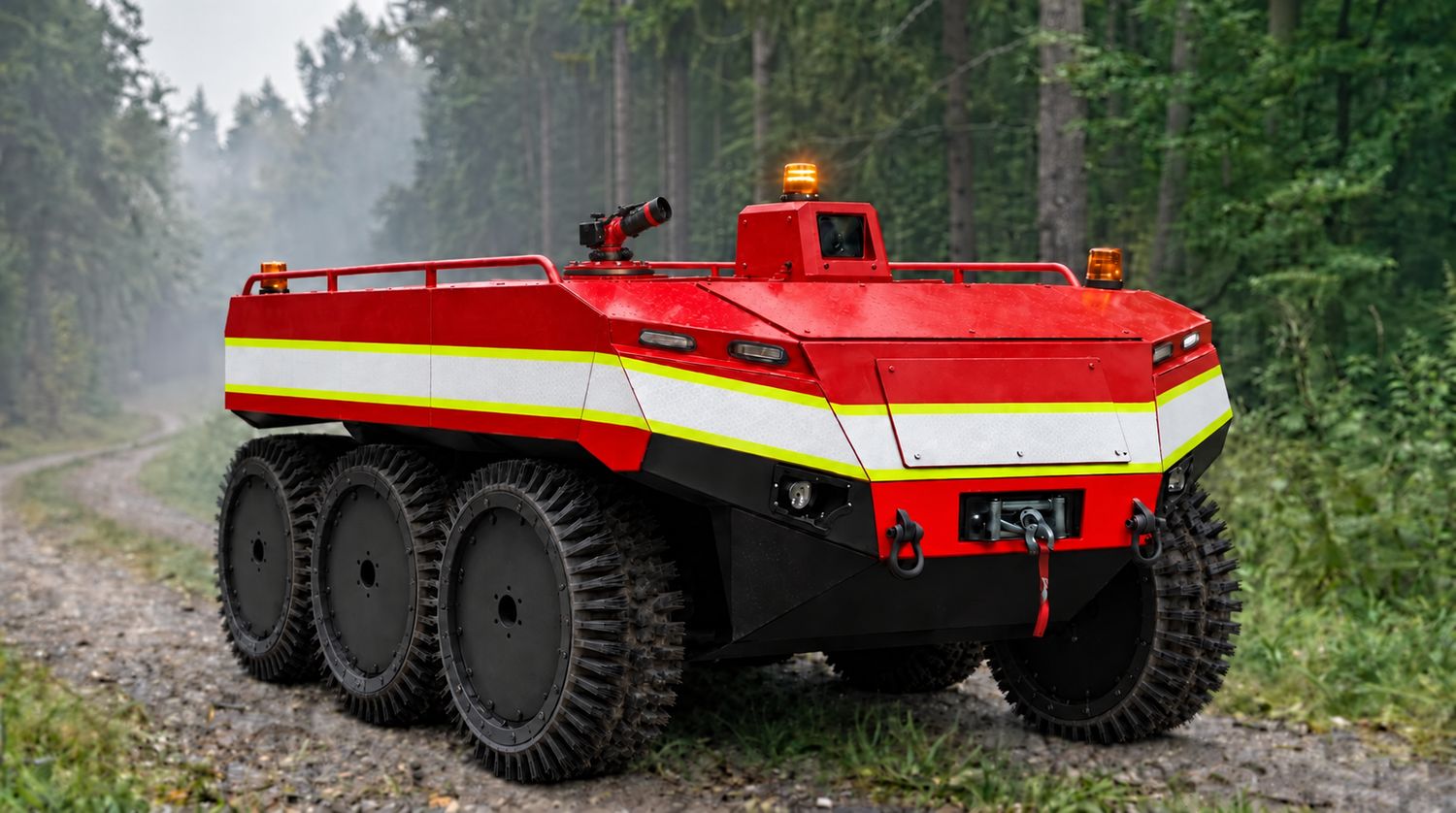
A remotely operated ground system advances to the seat of the fire and works a monitor where a crew cannot be allowed to stand.
A remotely operated ground system advances to the seat of the fire and works a monitor where a crew cannot be allowed to stand.
The closer to the fire, the higher the price of a human being there.
Radiant heat, smoke, falling burning trees and a sudden shift in the fire line limit not the crew’s skill but the distance they are permitted to approach.
So the monitor ends up further back than the task requires. The stream loses density, water does not reach the base of the fire, and part of the flow is wasted.
An unmanned machine removes that limit. It closes to the distance dictated by how the monitor works, not by human safety.
We do not claim the machine drives into flame. It works as close as the ground and the terrain allow — and that is markedly closer than a crew can get.
The water tender or trailer goes as far as the terrain allows and stops at the last accessible point.
The trailer is uncoupled and stays there as the water source.
A hose line is run from the source to the machine.
The machine advances to the seat of the fire and works the monitor, fed through the line.
Flow in this arrangement is limited by the source, not by what the machine carries. At no stage does a person approach the fire.
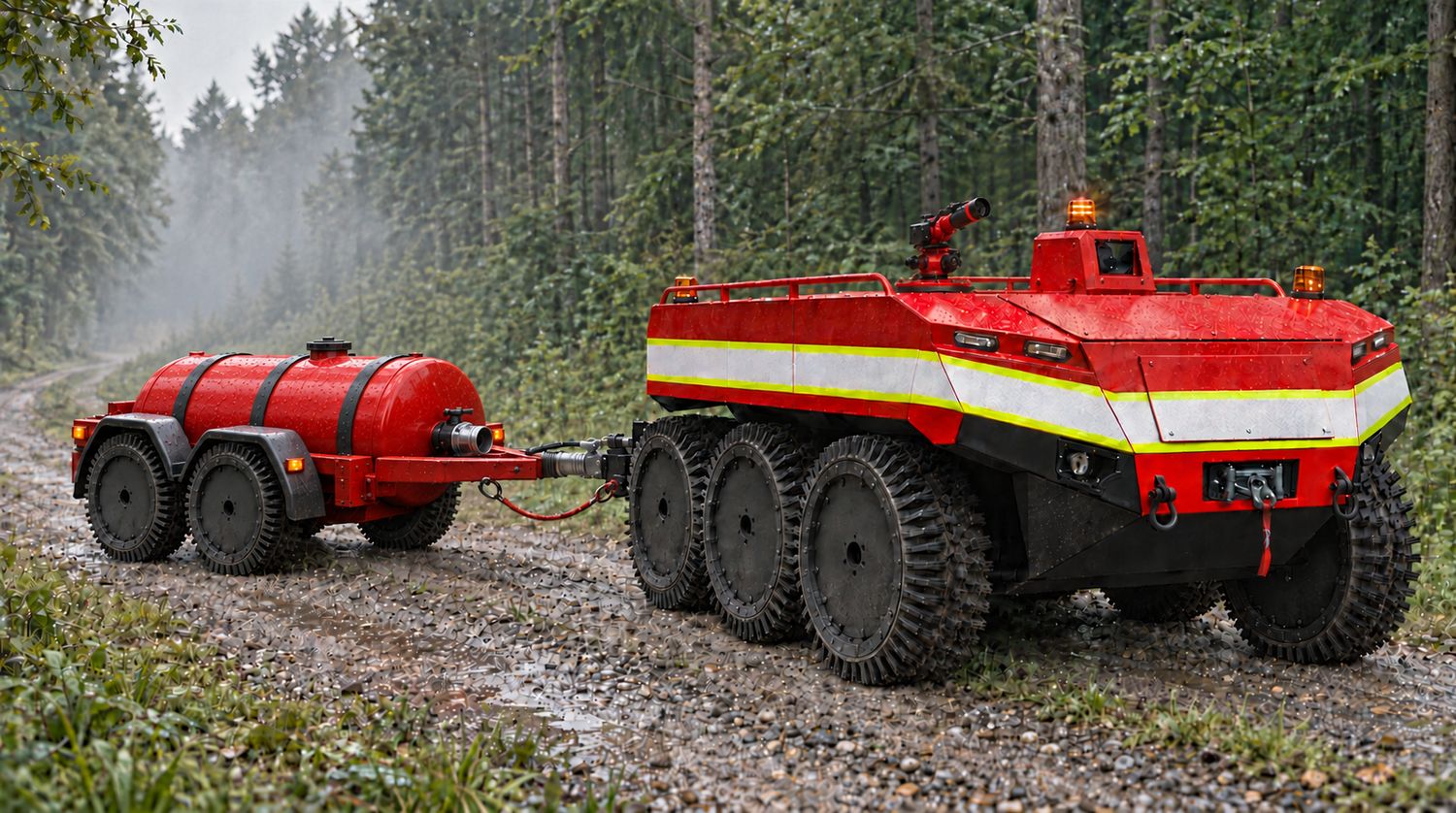
The equipment is off the shelf. The platform provides the mount, the power and the controls.
A serial monitor with electric traverse and elevation. It fits the payload mount, connects to the line from the source and is worked from the operator console alongside the machine.
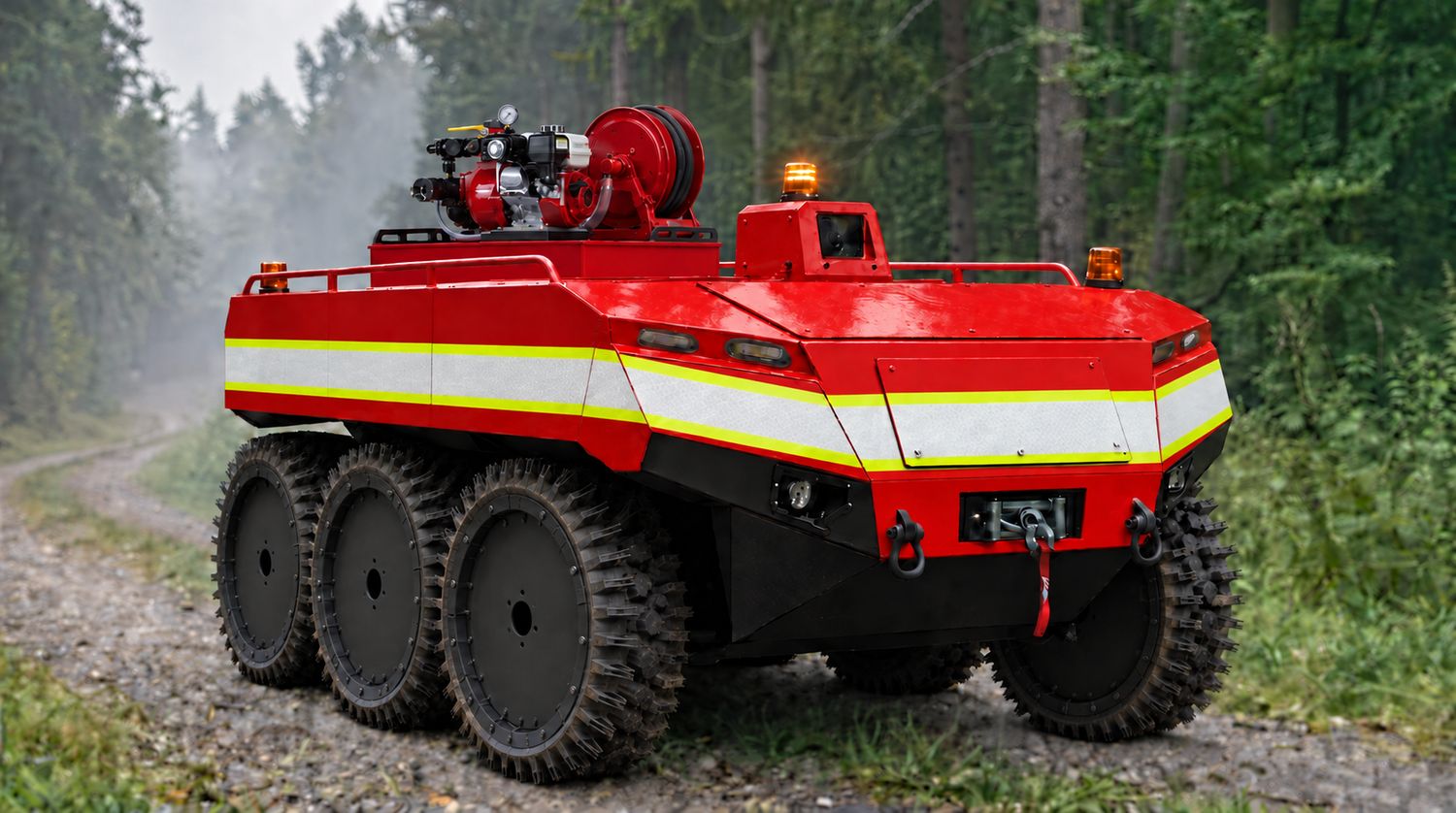
Tank, motor pump and hose reel on a common frame. Used where a line cannot be run: an isolated hotspot, a far corner, a point beyond an obstacle.
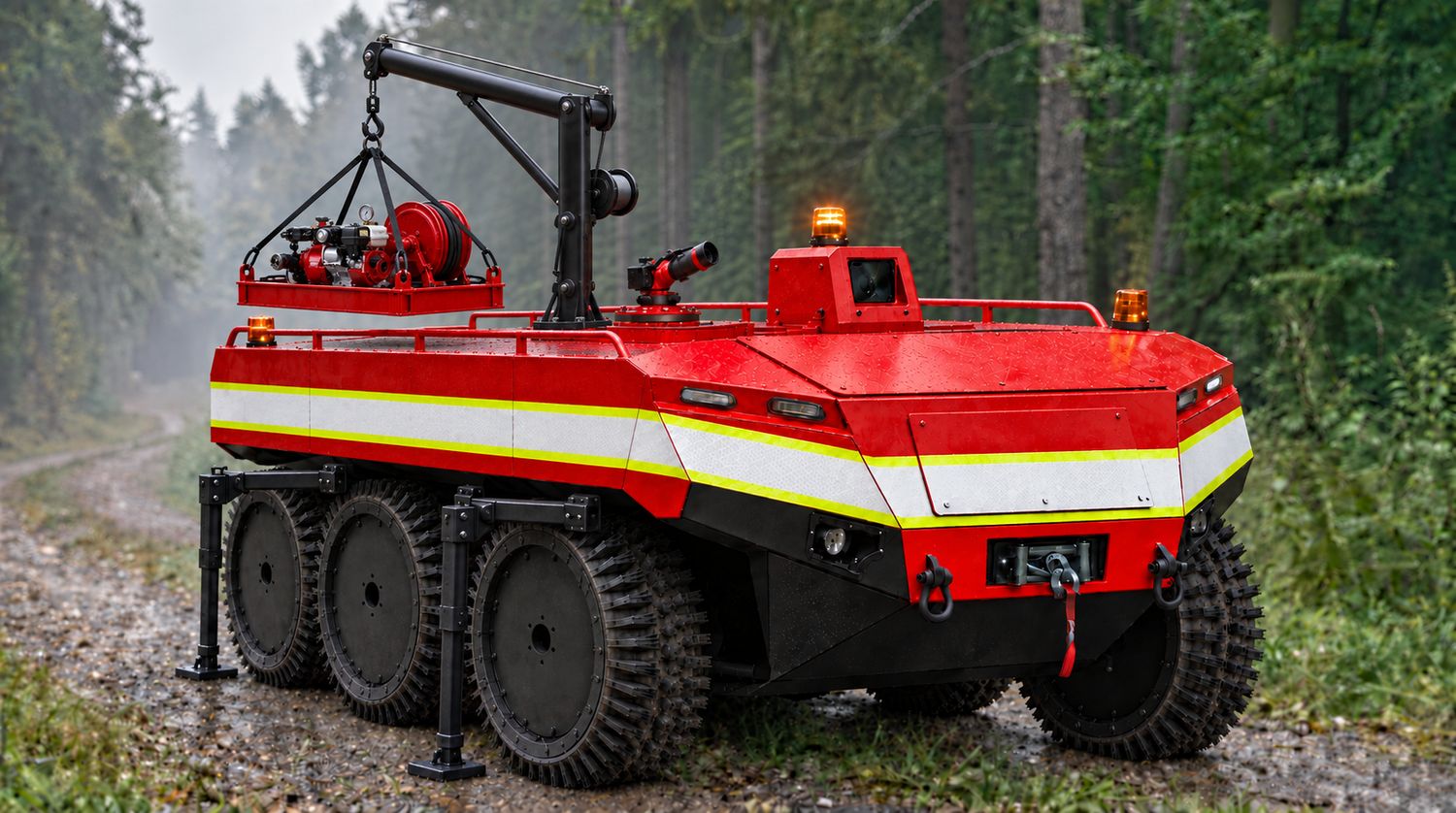
A winch jib on the load-bearing frame lets the crew swap configuration on site. Dry, a tank and pump skid weighs about a hundred kilograms and a monitor around forty; water goes in after mounting.
Lifting, the approach and holding a point pass to the machine. People stay with the work that requires skill, judgement of the scene and a human presence.