Mountain rescue
The casualty
rides out
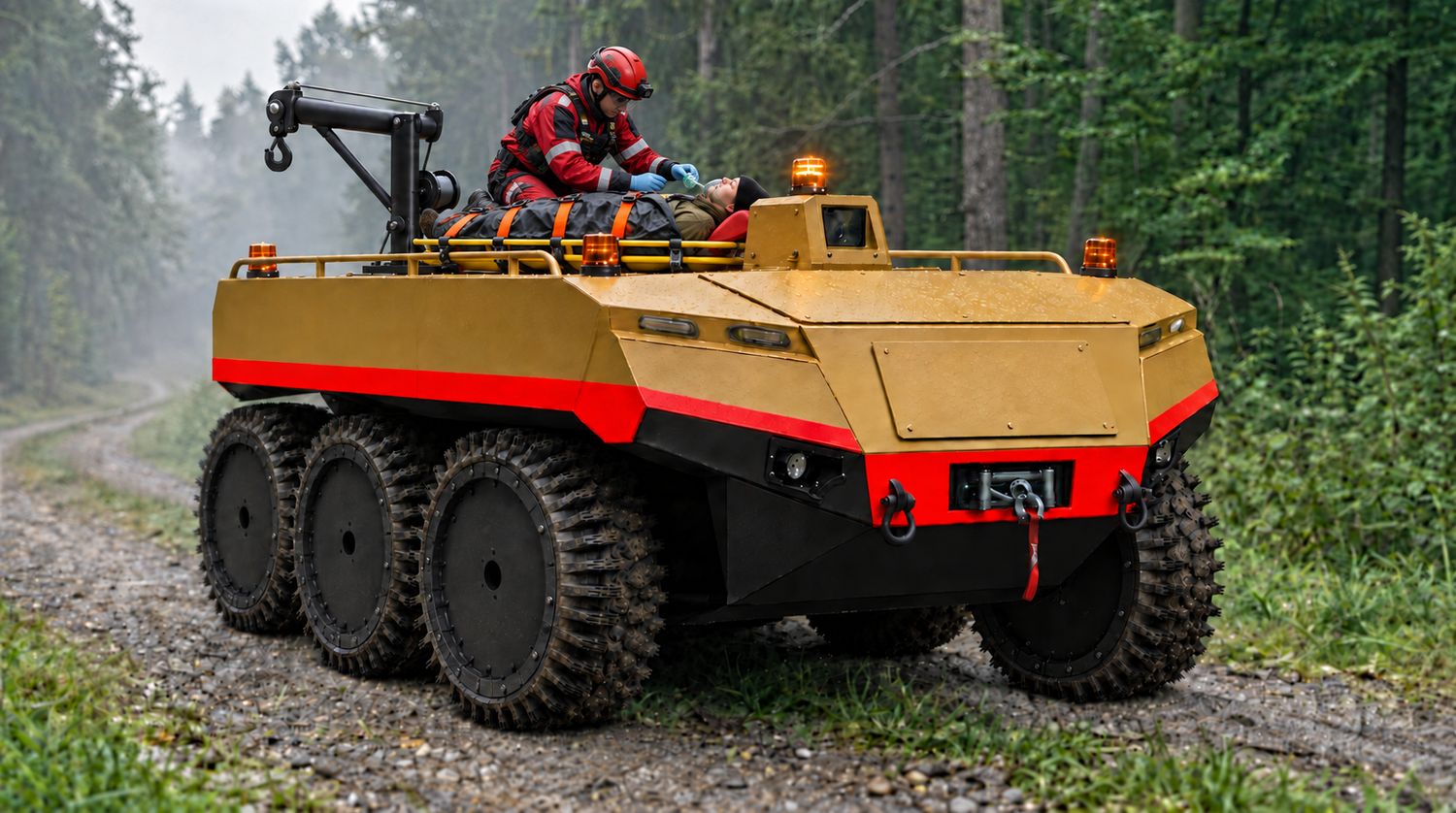
A mobile carrier running evacuation, medical support, aerial reconnaissance, communications and logistics at the same time.
A mobile carrier running evacuation, medical support, aerial reconnaissance, communications and logistics at the same time.
The search takes hours. Getting the casualty down the slope takes as long again.
A stretcher over broken ground needs six to eight people working in rotation. On a steep section, on scree and in the dark, progress falls to a few hundred metres an hour.
The carry-out begins after the team has already done the climb and the search. They reach the vehicle exhausted, and a second task the same day is beyond them.
This is also where the team injures itself most often: losing your footing on a slope is easier with a stretcher than without one.
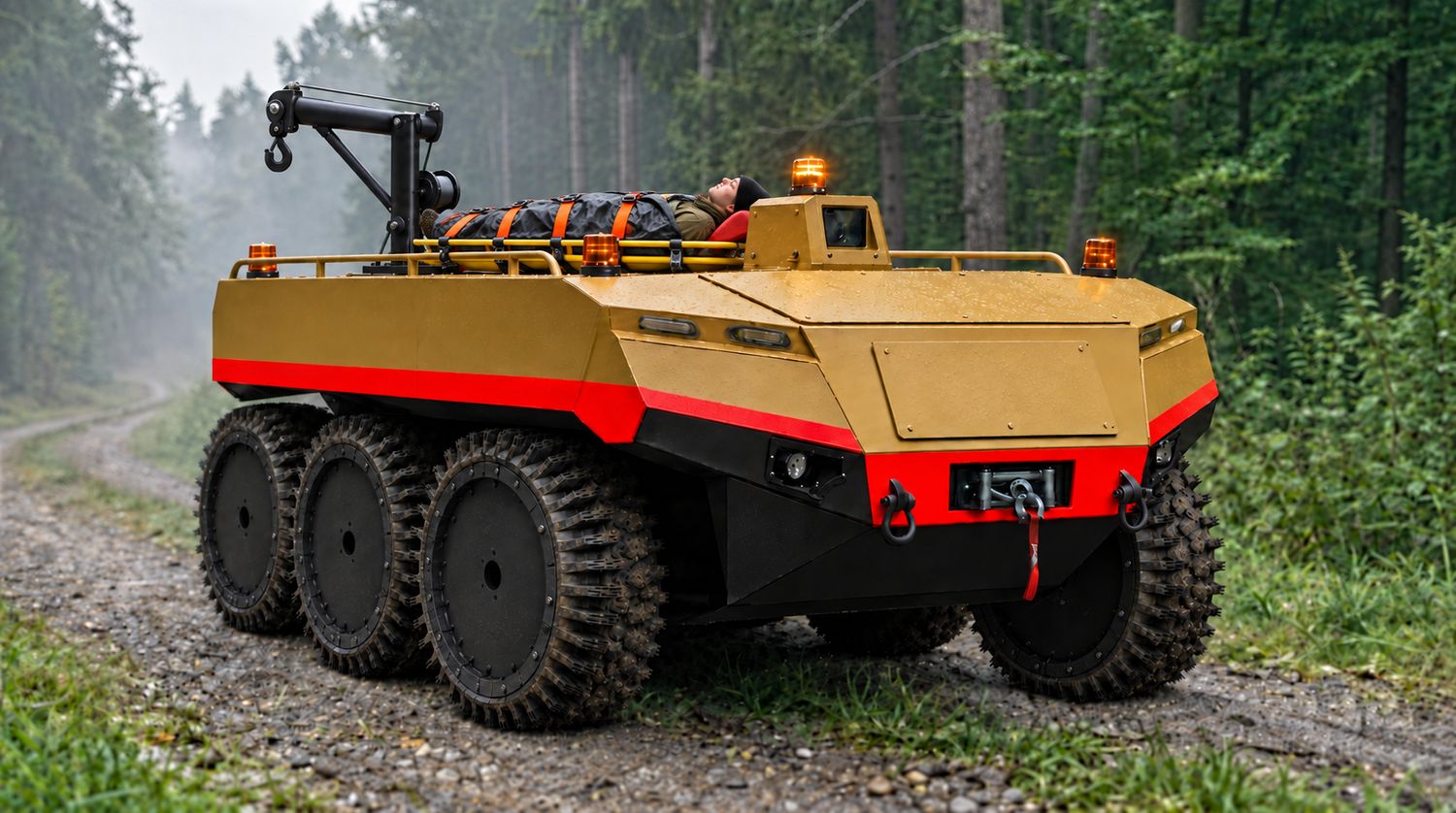
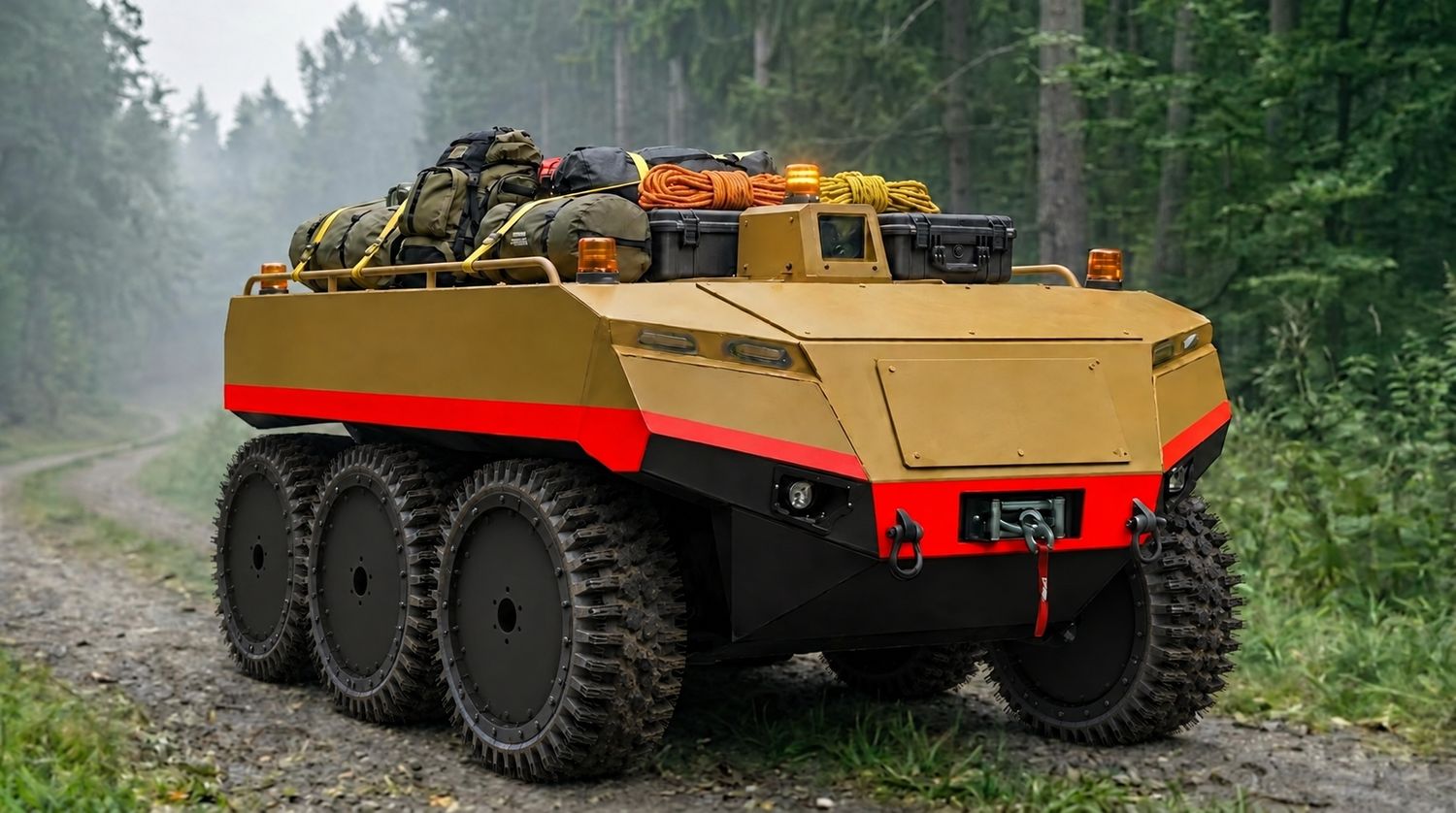
One carrier takes on what today requires several separate assets and several pairs of hands.
The rescuer does not haul equipment over rough ground, does not go back for gear, and does not carry the casualty out by hand where no vehicle can reach.
The team arrives ready to work rather than exhausted, and stays in contact with the control centre throughout the callout.
The casualty is taken on a standard stretcher with strap restraint and head support. Three-stage passive damping isolates them from the terrain.
First aid supplies, oxygen, consumables and monitoring equipment travel to the point together with the rescuer.
The aircraft lifts straight off the platform: route survey, search across the ground, assessment of what lies ahead.
Extends reliable contact between the team and the control centre where terrain blocks the signal.
Equipment, water and supplies to the working point in one run. On the way back, equipment and the casualty.
A winch jib on the load-bearing frame lifts the stretcher onto the platform, removes and fits modules and handles heavy items — with no forklift, no crane and no second vehicle.
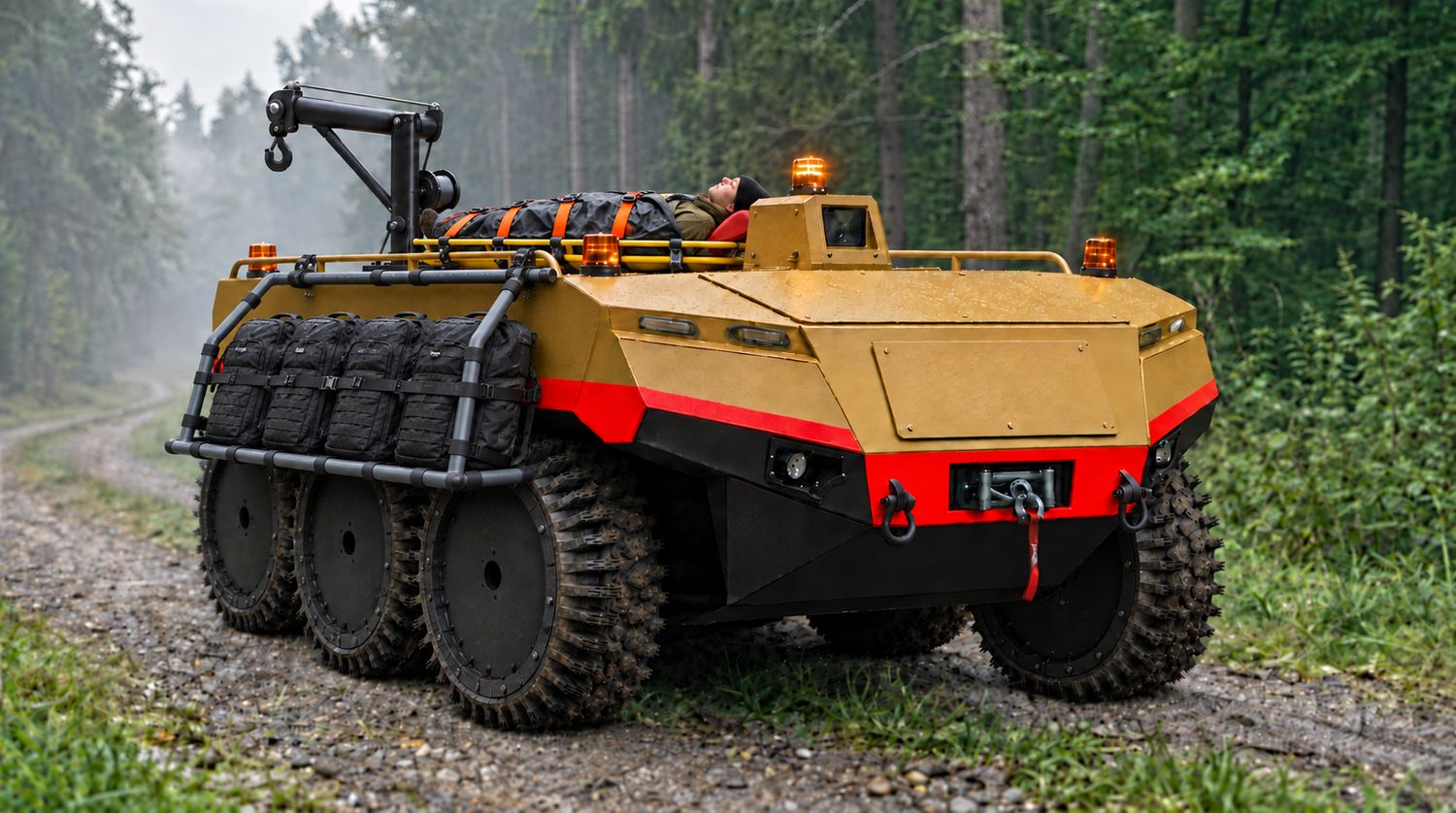
The system takes on delivery of equipment and medical supplies and the carry-out of the casualty. The team keeps its strength for the work that requires skill and a human presence.